Why This Conversation Matters to HMLV Shops
Small-to-mid-size manufacturers with high product variety and short runs live in a world of constant change – new job specs, rapid engineering tweaks, volatile schedules, and razor-thin margins. Traditional answers – Enterprise Resource Planning (ERP) and Manufacturing Execution Systems (MES) – can feel like using a sledgehammer to crack a peanut:
- Price tags easily run well into six figures. A recent ERP pricing survey shows cloud solutions for SMB manufacturers at $50–$200 per user/month plus $50 k–$250 k in implementation fees for mid-sized deployments. Larger on-prem projects break the $1 M line. Source
- Implementation costs average $8,500 per user over five years for mid-size firms – before customizations and integrations kick in. Source
- MES tools, meanwhile, focus on granular machine data; the market is booming (CAGR 9.4 % through 2032) but adoption requires sensor networks, integration work, and new operator workflows. Source
HMLV leaders often conclude: “Great tech – wrong size, wrong budget, wrong timeline.” That’s exactly where JobTraQ’s no-code workflow automation carves out a smarter path.
Quick Definitions (and Where Each Shines)
|
System |
Core Purpose |
Sweet Spot |
HMLV Pain Points |
|
ERP |
Enterprise-wide planning, finance, inventory, HR |
Multi-site, transactional scale |
Expensive licenses, slow change cycles, IT heavy |
|
MES |
Real-time production execution, machine data, OEE |
High-volume, automated lines |
Sensor/integration costs, narrow scope, complexity |
|
JobTraQ (No-code workflow management) |
Digitize and orchestrate any process – without coding |
Agile teams, rapid change, compliance-heavy, task hand-offs |
Tailored forms & flows in days, fractional cost, low IT load |
Key takeaway
ERPs tell you what should happen; MESs tells you what just happened; JobTraQ lets you make it happen – quickly, flexibly, and accurately.
The Hidden Cost of Traditional Systems for HMLV Manufacturers
- Implementation Drag
Months (sometimes years) of discovery, customization, and data migration stall improvements – while chaos and firefighting continue. - Change-Order Paralysis
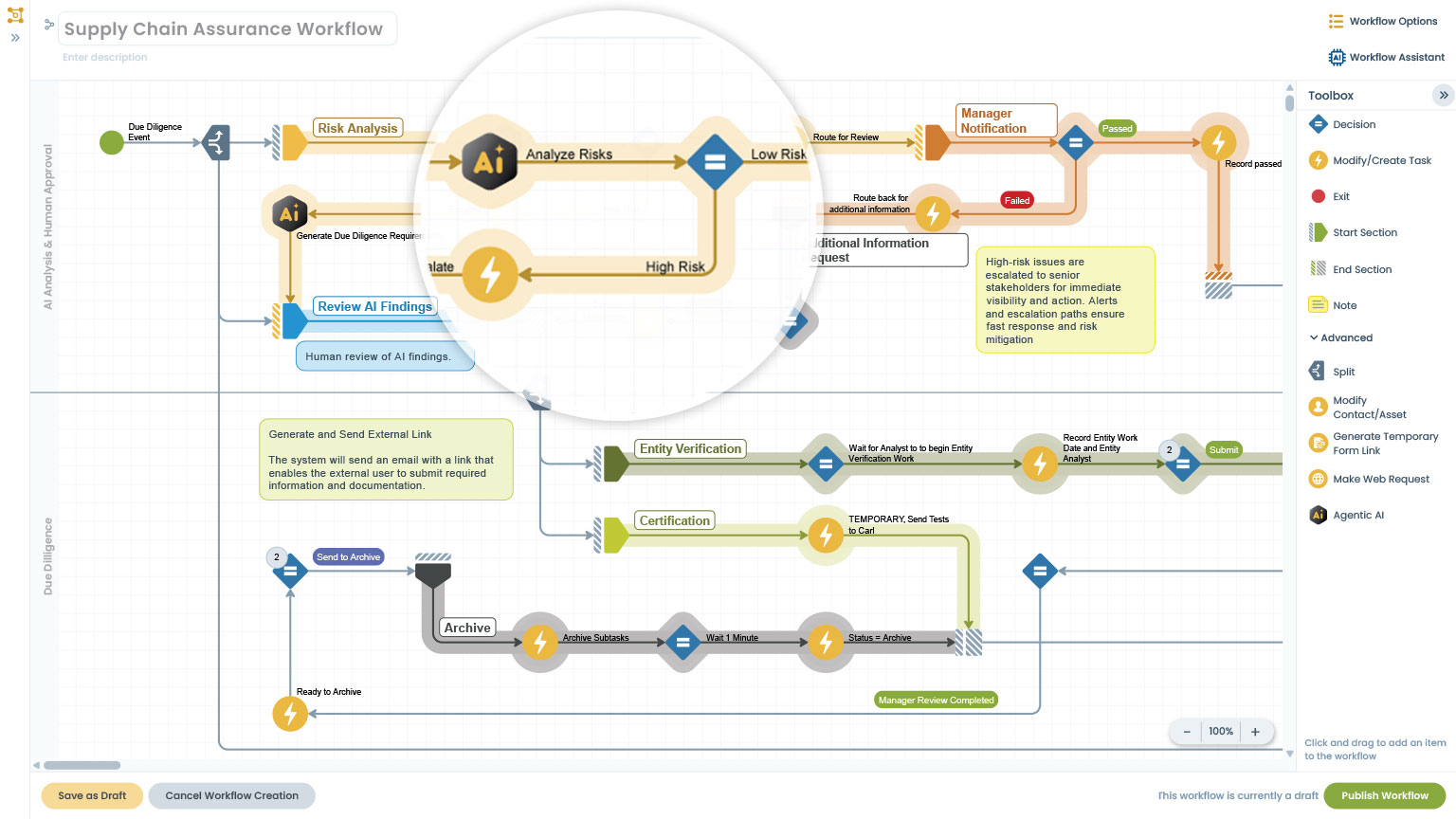
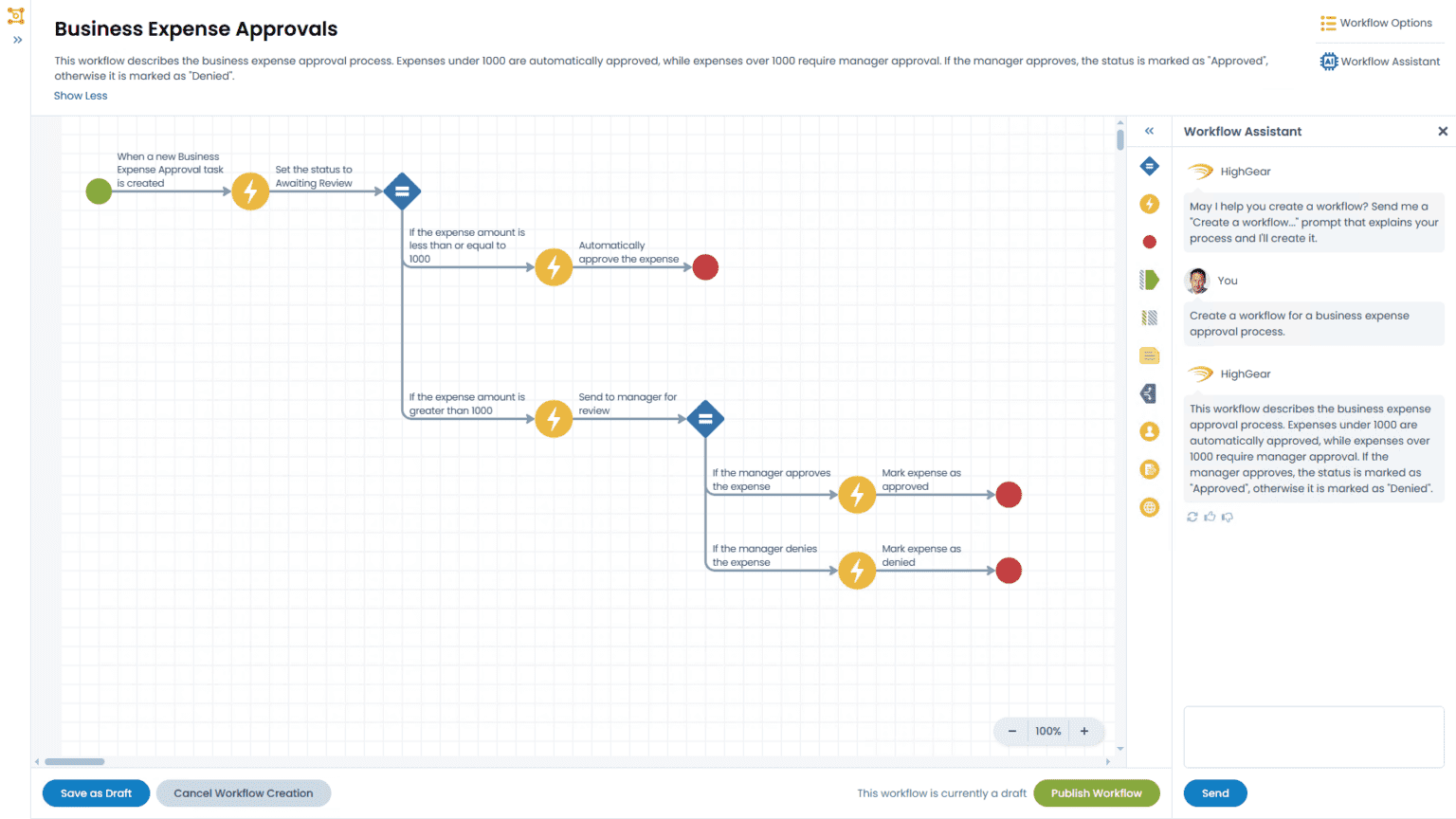
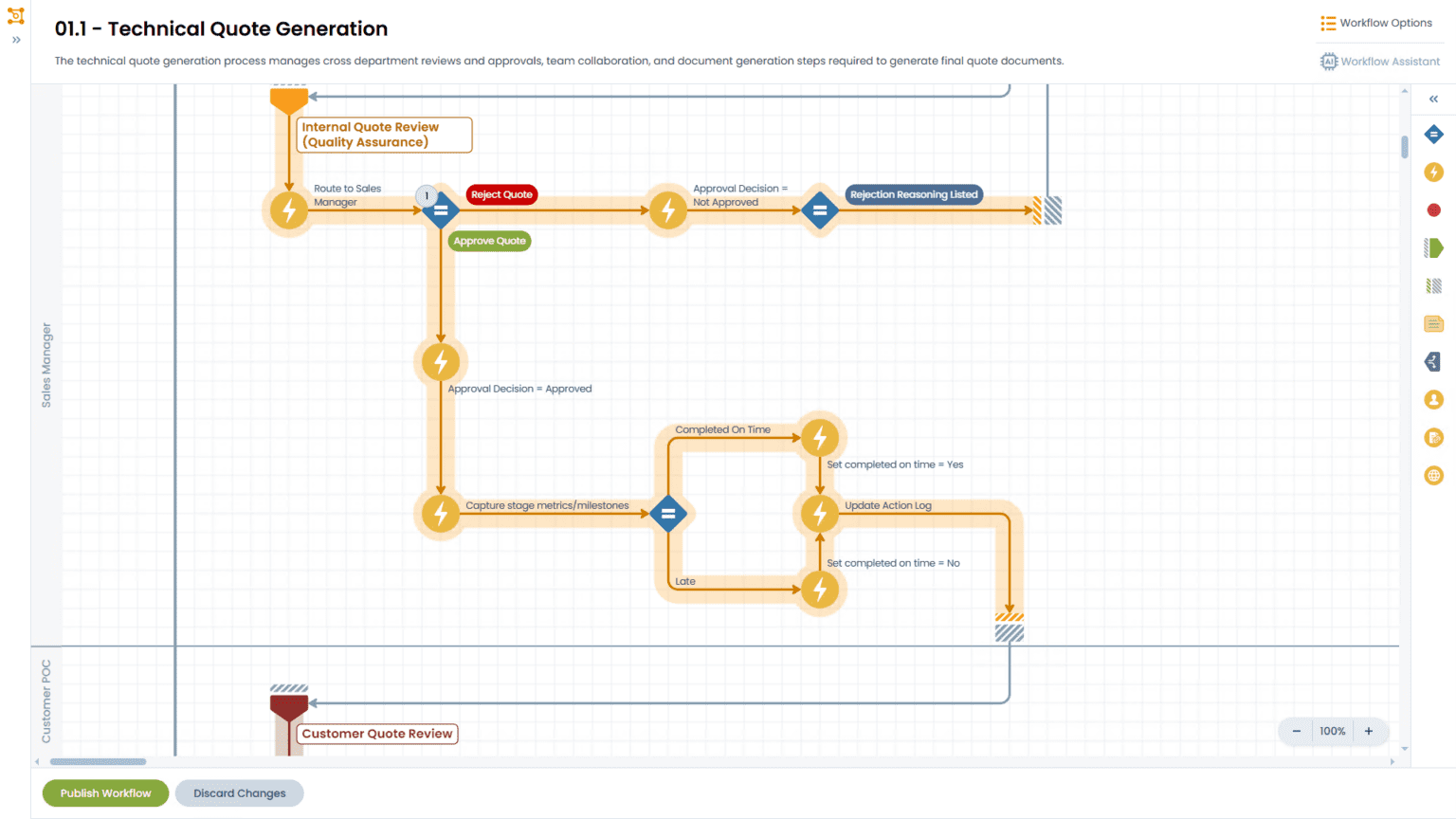
In HMLV, engineering changes arrive constantly. Re-configuring ERP workflows or MES data models to keep up often requires consultants. JobTraQ’s drag-and-drop editor adapts as fast as you can make the changes. - IT & Integration Overload
Many small to mid-size shops run lean IT. An ERP or MES rollout forces unplanned hires or expensive managed-services contracts. JobTraQ is cloud-hosted with minimal admin overhead and open REST APIs for integrations with existing systems. - License Bloat
Paying for seats in finance, HR, and planning if you really just need production visibility drains budget. JobTraQ’s user licensing focuses on workflow participants – no extraneous modules. - User Adoption Risks
Operators and supervisors often reject complex UIs meant for enterprise planners. A no-code tool with familiar, form-based screens drives higher adoption and long-term success.
Five Critical Workflows You Can Tackle Quickly
All examples are drawn from real HMLV deployments.
- Job Packet / Router
Automatically generate job packets when the customer PO is approved, attach drawings, and route to each work center. Barcode scans update status – no spreadsheet macros needed. - Engineering Change Orders (ECOs)
Non-engineers click a “Raise ECO” button, triggering approvals, revision control, and notifications to purchasing and QA – closing the dreaded communication gap between design and the floor. - First-Article Inspection (FAI)
Capture dimension data on tablets, embed photos, and auto-generate AS9100 or similar reports. Auditors love the digital paper trail. - Corrective & Preventive Actions (CAPA/NCR)
When defects arise, operators submit a form that kicks off 8-D root-cause tasks, deadlines, and alerts – all traceable to the original job. - Supplier Material Tracking
Create receiving‐to‐production workflows complete with lot numbers, cert uploads, and trigger emails if inspection hasn’t cleared within 24 hours.
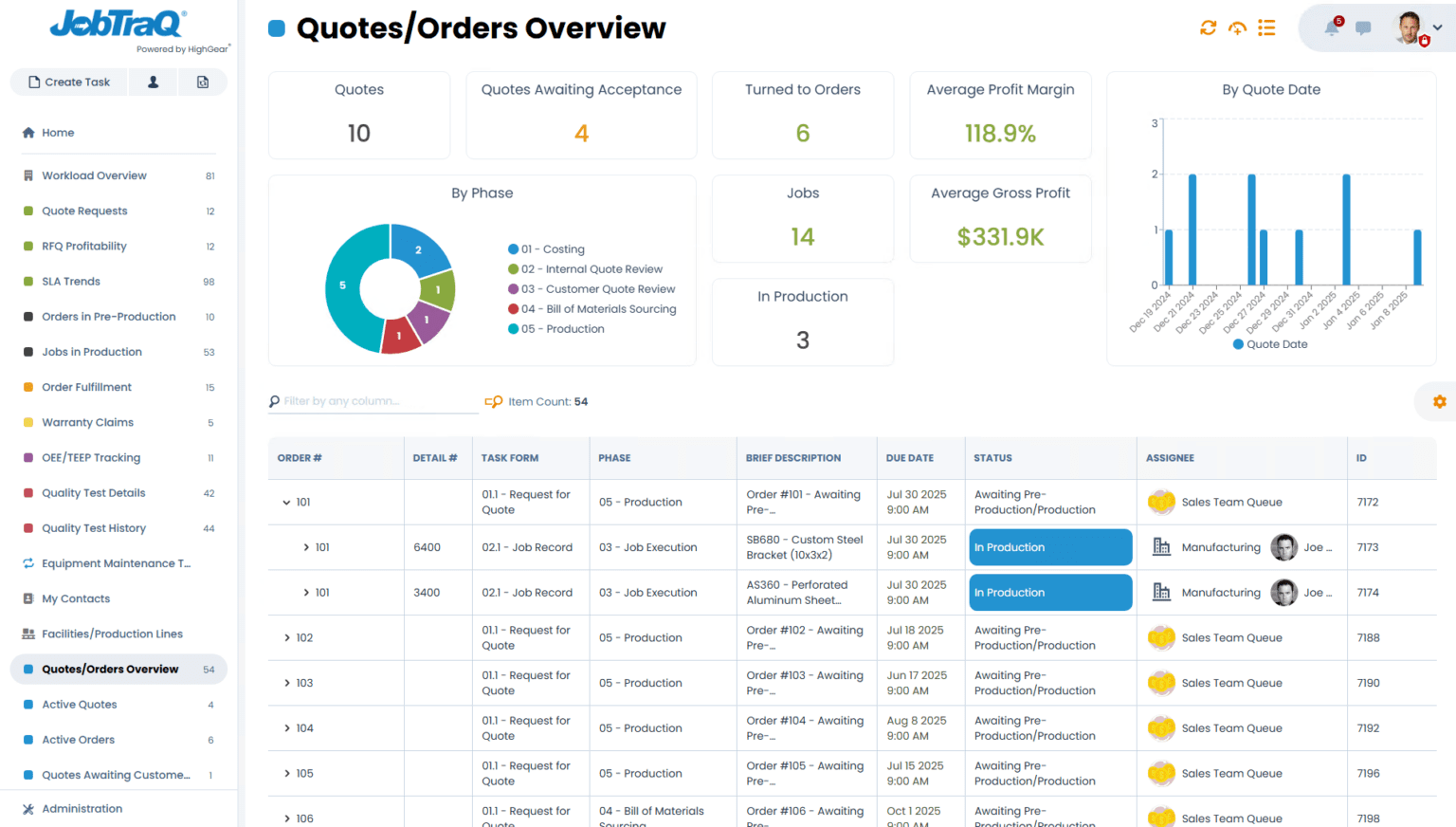
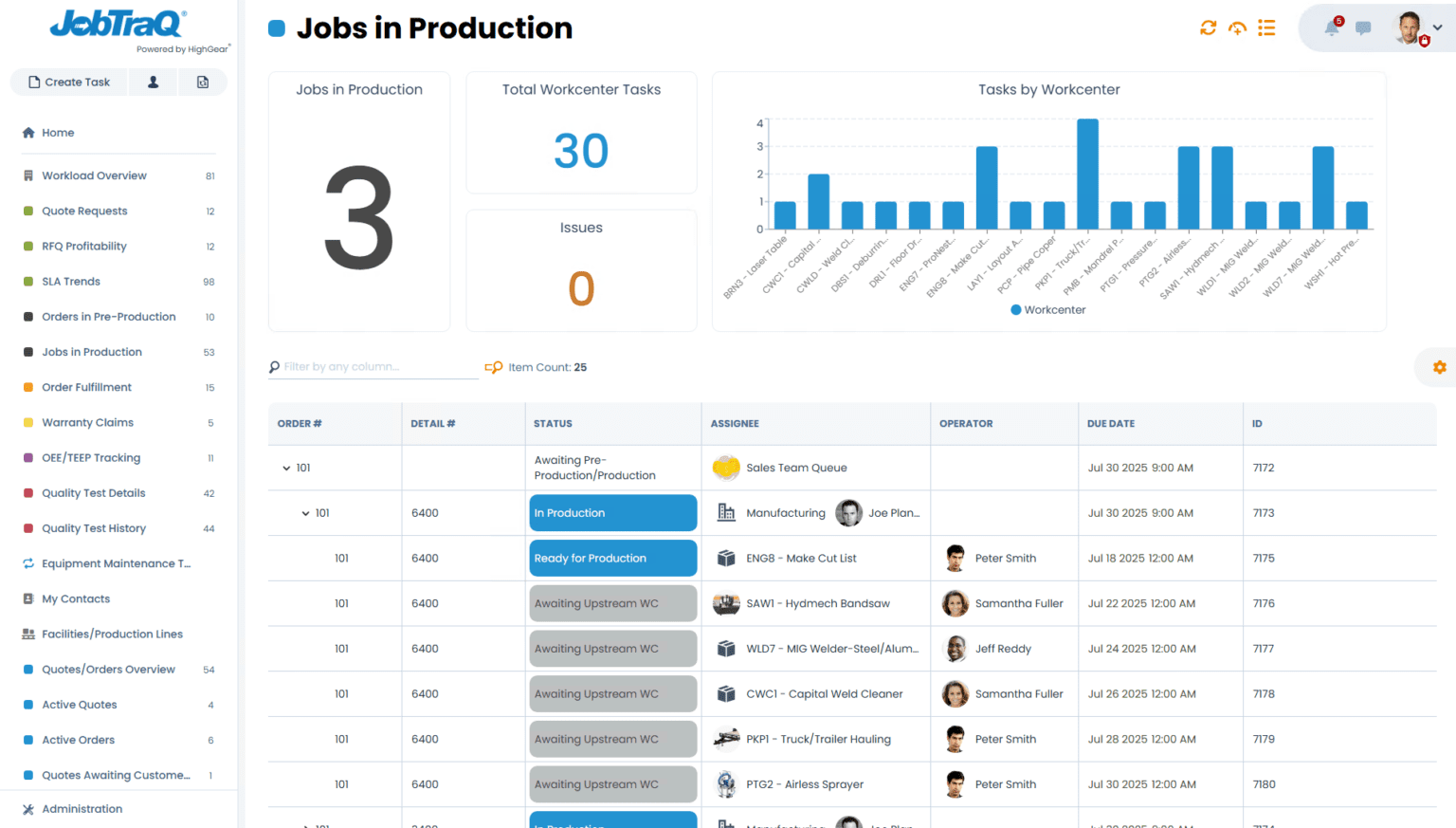
Result: You gain real-time status without buying machine sensors or replacing existing inventory systems.
Feature-by-Feature Comparison
|
Capability |
ERP |
MES |
JobTraQ |
|
Deployment Speed |
6–18 months |
6–12 months |
30–90 days |
|
Typical Cost (50 users) |
$250 k+ impl. + subs |
$150 k+ hardware + subs |
Fraction – often < $50 k total |
|
Process Flexibility |
Requires IT consultancy |
Limited to shop-floor scope |
Drag-and-drop editor |
|
IT Dependence |
High |
Medium-High |
Low / citizen developer |
|
Compliance Docs & Audits |
Add-on modules |
Requires PLM links |
Verified e-sign, audit log |
|
Operator UX |
Enterprise screens |
Machine dashboards |
Mobile-friendly forms |
|
Integration Approach |
Middleware |
OPC/SCADA |
REST, webhooks, Excel import |
ROI Timeline – What Can You Expect?
- Day 1: Get hands on with the system. JobTraQ’s ease of use means users can immediately start exploring how to build their own processes in the platform.
- Day 30: First workflow templates live across production & quality; paper job packets reduced by 80 %.
- Day 60: Remove manual hand-offs – operators enter updates at the workcenters; supervisors see job status without hunting.
- Day 90: Throughput up 10-15 % as WIP bottlenecks surface in real-time. Coaching focuses on constraints, not guesswork.
- Year 1: Aggregate savings (labor hours + scrap + expedited freight) often exceeds 3–5 × license fees – well-documented in customer case studies.
Remember: ROI isn’t just dollars – it’s stress reduction for schedulers, happier auditors, and fewer late-night “Where’s my job?” calls.
Decision Framework: Is JobTraQ the Right Next Step?
Answer these questions:
- Do we change routings or specs at least weekly?
If yes, you need agility more than deep planning horsepower. - Is our IT team < 5 people (or nonexistent)?
Self-service configuration beats a custom-code backlog. - Are audits a recurring headache?
Built-in traceability > spreadsheet archaeology. - Do operators rely on tribal knowledge?
A visual workflow captures tacit steps before retirees depart. - Is our budget under $100k this year?
No-code workflow covers critical gaps now; ERP can follow when growth demands.
If you scored “yes” on three or more, JobTraQ likely delivers a faster, safer win than a full ERP or MES rollout.
Implementation Snapshot: Kickoff to Go-Live in 30 Days
|
Phase |
Timeline |
Key Actions |
|
Week 0 |
Contract signed |
Provision sandbox and start exploring |
|
Week 1 |
Discovery workshop |
Map top-3 pain-point workflows |
|
Week 2 |
Build & iterate |
Drag-and-drop forms, routing, SLAs; import legacy data |
|
Week 3 |
Pilot & refine |
Train super-users; gather operator feedback |
|
Week 4 |
Go-live |
Migrate to production; enable dashboards & notifications |
Past HMLV customers report first measurable gains within the first production cycle.
Integration Without the Headaches
- Current ERP: Keep your finance and inventory modules – JobTraQ syncs orders via API.
- PLM/CAD: Attach PDFs and drawings; revision updates trigger downstream alerts.
- Machine Data (Optional): If you later add PLC sensors, JobTraQ’s REST endpoints accept OEE metrics, closing the loop without a full MES purchase.
Common Objections – Addressed
|
Objection |
Reality with JobTraQ |
|
“We don’t have time for another system.” |
Templates + drag-and-drop = days, not months. Many customers go live during normal shift hours. |
|
“Our processes are unique.” |
That’s exactly why a no-code platform shines – mold the workflow to your steps. |
|
“What about data security?” |
Azure Gov Cloud hosting plus on-prem option meets ISO 27001 / ITAR environments. |
|
“Operators won’t use software.” |
Mobile-ready UIs, barcode scanning, and role-based dashboards mean zero keystrokes if desired. |
The Best Next Step You’ll Ever Take
Ready to see your own numbers? Schedule a 30-minute ROI discovery call or start a free 45-day trial – no IT involvement required. Let JobTraQ prove that workflow management, not more modules, is the fastest path to calmer, more profitable HMLV operations.
Key Takeaways (TLDR)
- Big systems cost big money – often 5-10× what an HMLV shop needs.
- JobTraQ delivers core workflows in under 90 days with minimal IT.
- ROI shows up fast: less paper, fewer delays, happier auditors.
- ERP and MES still have roles – but timing matters. For many HMLV manufacturers, workflow automation now and ERP later is the smarter sequencing.
- Action beats analysis: A pilot workflow in JobTraQ can answer questions an RFP never will.